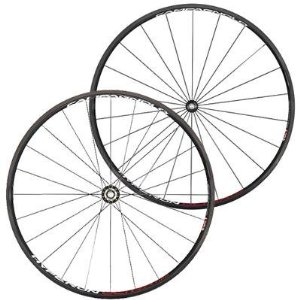
Quick definitions: Campagnolo's Bora and Hyperon lines are Italian-made carbon wheels aimed at the premium end of the market. Shimano's Ultegra and Dura-Ace wheel lines span from workhorse alloy to race-level carbon, with Ultegra sitting deliberately below Dura-Ace on price and weight.
What actually differs
What CULT bearings are actually claiming
Campagnolo's CULT system (Ceramic Ultimate Level Technology) pairs ceramic bearings with an oil-based lubricant instead of the grease used in most bearing systems, which the brand claims reduces friction and resists the corrosion that can affect traditional greased steel bearings over time. It's a genuine engineering approach, not just a marketing label, and it's a meaningful part of why the Bora Ultra Two commanded roughly six times the Shimano Ultegra's price in the same era.
Why the Shimano comparison isn't really fair, and why that's useful
Comparing a $4,000 Italian flagship to a $650 workhorse wheel isn't an apples-to-apples test, it's a useful illustration of how wide the price range within "road wheels" actually is. Most riders never need to choose between these two specific wheels; the more useful question is which end of that range your riding actually justifies. See our comparison of whether expensive wheels are worth it for that framework applied more generally.
Lean Campagnolo ifyou're already running a full Campagnolo groupset and want componentry that matches, or ceramic bearing technology and Italian-made carbon construction genuinely matter to your buying decision.
Lean Shimano ifyou want a dependable training or entry-race wheel at a fraction of the cost, with parts and service available at nearly any shop regardless of what groupset you run.
Archive-sourced vs currentThe Campagnolo Bora Ultra Two sold for around $4,000 and the Shimano Ultegra WH-6700 for $650, both in 2010. That roughly six-times price gap between a flagship Italian carbon wheel and a workhorse alloy wheel has remained a similar order of magnitude into current pricing, even as both brands' individual lineups have shifted.