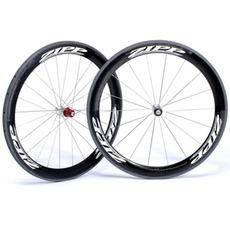
Quick definitions: "Alloy" here means aluminum rim wheels, the material most stock and budget wheels use. "Carbon" means carbon-fiber composite rims, lighter per unit of stiffness but more expensive to manufacture.
What actually differs
When the aero and weight advantage actually shows up
Above roughly 20mph on flat or rolling terrain, a majority of a rider's effort goes into overcoming aerodynamic drag rather than lifting weight. This is the regime where deep carbon wheels earn their keep: a rider holding group-ride pace on flat roads will feel a real difference switching from a shallow alloy wheel to a 45-60mm carbon wheel. On climbs above roughly 6-7% grade, where speeds drop well below that threshold, the weight difference between a light alloy wheel and a similarly light carbon wheel narrows enough that the aero advantage mostly disappears. Seewheel weight vs aero for the full breakdown of where that crossover happens.
The trade-offs carbon buyers accept
- Repair risk. A rim-brake carbon wheel that overheats on a long descent, or takes a hard pothole hit, can crack in a way alloy usually doesn't. Disc brakes remove the heat issue but not the impact-crack risk.
- Price of entry. Even budget carbon starts around where premium alloy tops out. There's very little overlap in price between the two materials at a given quality tier.
- Diminishing returns above the mid tier. The jump from a $300 alloy wheel to a $1,000 carbon wheel is dramatic. The jump from a $1,500 carbon wheel to a $3,000 carbon wheel is real but much smaller in percentage terms.
Buy carbon ifyou ride 3+ times a week, race or do fast group rides, ride mostly flat-to-rolling terrain, or you're already fit and looking for the next real improvement after tires, fit, and drivetrain are sorted.
Stick with alloy ifyou ride under 100 miles a month, you're still building base fitness (the engine matters more than the wheels at this stage), you ride in an area with frequent hard braking or rough roads, or your budget realistically caps out under $800.
Archive-sourced vs currentA Shimano Ultegra WH-6700 alloy wheelset sold for about $650 in 2010. Reynolds Assault, a full-carbon clincher, sold for about $1,500 the same year. That roughly 2.3x price ratio between mid-alloy and mid-carbon has held fairly steady into current retail pricing (alloy $300-$700, entry-mid carbon $1,000-$1,500).