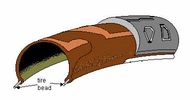
Quick definitions: Clincher is a tire with a separate inner tube holding the air. Tubeless uses an airtight tire-and-rim combination with liquid sealant inside instead of a tube; the sealant plugs small punctures as they happen.
What the watt-savings claim actually means
Independent lab testing has measured roughly 1-2 watts per tire of savings for tubeless over an equivalent clincher-and-tube setup at the same pressure. Across two tires, that's a few watts total, real but modest, and it matters far more to someone racing at the margins than to a rider who isn't chasing seconds.
The maintenance cost that gets left out of most pitches
Sealant dries out. Depending on climate and how often the wheel is ridden, that can happen in as little as two months. A rider who sets up tubeless once and never checks it again is, within a season, effectively riding an unsealed tire without realizing the protection is gone. This is the single biggest reason tubeless disappoints some riders: it's not a "set and forget" upgrade the way it's often marketed.
Go tubeless ifyou're willing to check and top off sealant on a calendar reminder every 2-4 months, you ride on debris-prone roads where small punctures are common, or your bike already came tubeless-ready and switching to clincher would mean buying new wheels anyway.
Stay clincher ifyou want the simplest possible roadside fix, you don't want another maintenance item on the calendar, or your current wheels aren't tubeless-compatible and the upgrade cost isn't justified by your riding volume.
Note on the archive materialRoad tubeless didn't exist as a mainstream option in the 2010-2015 window the bikewheelsets.com archive covers; every wheel reviewed there was clincher or tubular. There's no historical price anchor to cite for tubeless specifically, which is itself a marker of how much this part of the category has changed since then.