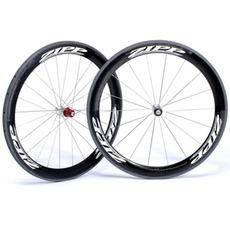
What actually changes on a climb: rotational weight (the rim and tire, which are spinning) costs more energy to accelerate than static weight (the hub, which isn't). That's why climbing wheels chase a light rim first and treat hub weight as a lower priority, and why two wheelsets with the same total weight don't climb the same if one carries more of that weight in the rim.
Rim weight, not total weight, is the number that matters
A wheelset's total published weight is the number every spec sheet leads with, but for climbing specifically, how that weight is distributed matters more. A wheel with a light rim and a slightly heavier hub climbs better than a wheel with the same total weight split the other way, because the rim and tire are what has to be accelerated every time cadence changes, standing out of the saddle on a steep pitch, or surging out of a switchback. This is also why cyclists remain willing to pay a premium for shaving the last 100-150g specifically off a rim, even though the same grams saved on a hub shell would cost far less.
What the archive documented, wheel by wheel
The 2010-2015 bikewheelsets.com archive reviewed several wheelsets explicitly marketed or tested as climbing wheels. These are direct findings from that archive, not generalized advice:
The pattern across all five: rim depths clustered at 32-46mm, not the 20mm box-section rims common on older alloy wheels, and every review that mentioned climbing specifically credited the low rim weight rather than the low total weight. That distinction has held up in current wheelset design too.
Current climbing wheelsets and where they sit
Current lightweight wheels have continued pushing rim weight down while keeping rim depth in that same 30-45mm range that balances weight against some aero benefit. The Roval Alpinist CLX II weighs 1,265g per the manufacturer's own spec and independent reviews, and the newer Alpinist CLX III cut that further to roughly 1,131g using composite spokes. Princeton Carbonworks lists its Alta 3532 climbing wheelset between roughly 1,094g and 1,202g depending on tire setup. These sit in the same weight band the archive's DV46T UL and Zipp 202 occupied over a decade ago, adjusted for how much lighter the category has gotten overall.
Spoke count on these current climbing wheels typically runs 16-24 per wheel, on the low end of the 20-32 range covered on low vs high spoke count wheels. That's consistent with the archive too: the Bontrager Race XXX Lite used "not many" aero spokes by the reviewer's own description, prioritizing rim weight over spoke redundancy.
Where the aero trade-off actually flips against you
A shallower, lighter rim isn't automatically the fastest choice, even on a climb. Current guidance from wheel testing and pro-peloton setup both point to the same rough rule: on sustained climbs steeper than roughly 6-7%, low weight wins because gravity dominates the physics. On shallower climbs, rolling terrain, or anything closer to flat, the time lost to aerodynamic drag over the full ride can outweigh the small time gained from lower weight on the uphill sections. That's why pro teams commonly run 30-40mm depths on summit-finish stages but switch to 50-60mm for flatter or rolling stages, not because the climbing wheels stopped working, but because the terrain changed which trade-off pays off. See wheel weight vs aero for the full breakdown of that math outside the climbing-specific case.
Rim depth: the climbing sweet spot
Most current climbing-specific wheels land between 30mm and 40mm. Under 30mm gives up aero benefit for a marginal extra weight saving that current rim engineering can usually achieve at 35-40mm anyway; over 45-50mm starts adding rotational weight and crosswind sensitivity that shows up specifically on a switchback climb, where a gust can push a deep front rim off line mid-corner. See50mm vs 35mm rim depth for the handling trade-off in more detail.
Carbon vs alloy for climbing
Nearly every wheelset built specifically for climbing today, current or archived, is carbon, because carbon layup lets a manufacturer hit a target rim weight without cutting spoke count as aggressively as an alloy rim would need. That doesn't mean alloy can't climb: a lighter alloy wheel with a standard 24-spoke build still climbs fine for most riders, it just won't hit the sub-1,300g category current carbon climbing wheels reach. Full trade-offs at carbon vs alloy road wheels.
When a "climbing wheelset" isn't the right pick
Skip the ultralight climbing category if most of your riding is flat or rolling, or if you're a heavier or high-power rider considering a sub-1,200g, low-spoke-count wheel without checking the manufacturer's stated rider weight limit. Seewheels for heavier riders for the named limits several of these same low-spoke-count wheels carry.
A dedicated climbing wheelset fits you ifyour riding includes sustained climbs steeper than roughly 6-7%, you're within the manufacturer's stated rider weight limit, and shaving rotational grams off the rim matters more to you than aero speed on flat sections.
Skip the dedicated climbing category ifmost of your terrain is flat or rolling, since a 40-50mm all-around wheel will likely be faster overall once aero drag over the full ride is counted, not just the climbs.
Archive-sourced, 2010-2011The archive's climbing wheels ranged from $1,799.99 (Easton EC90 SL) to $3,700 (Campagnolo Hyperon Ultra Two) for wheels weighing 1,040-1,222g. Current climbing wheelsets in the same rough weight band, like the Roval Alpinist CLX II (1,265g), sit well under that inflation-adjusted range, a genuine price improvement in the category rather than a marketing claim.