ComparisonNo affiliate links

Wheels for Touring vs Racing

Several wheels in this site's own archive were explicitly marketed to cover both touring and racing in one design, which is itself revealing: it usually means real compromises in both directions rather than a genuine best-of-both-worlds outcome. Touring and racing wheels start from different design briefs, and understanding both makes it easier to judge whether a "does everything" wheel is really doing everything well.

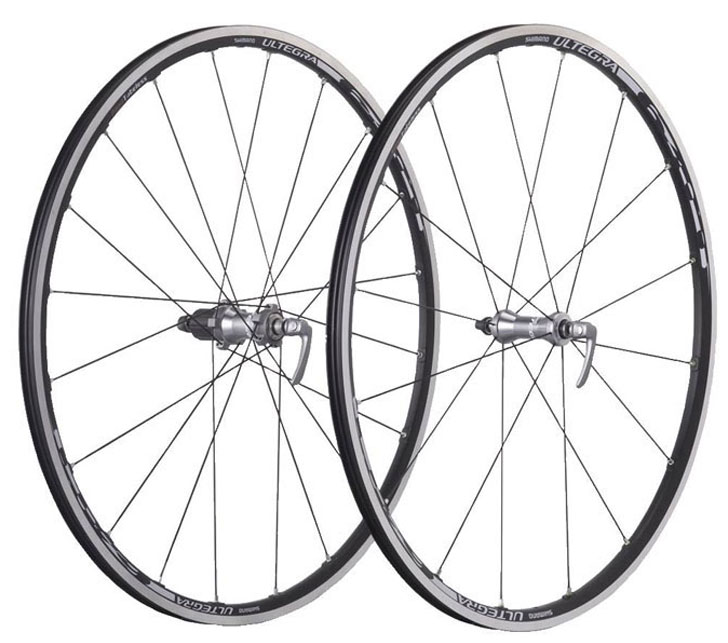
Shimano Ultegra WH-6700 wheelset, described in the archive as a reliable training wheelset, archived manufacturer product photo

The Shimano Ultegra WH-6700, described in its archive review as "a reliable, good quality training wheelset," positioned closer to the touring end of the spectrum than a dedicated race wheel (archived manufacturer photo).

Quick definitions: A touring wheel is built to carry sustained load reliably over long distances, sometimes with racks and panniers, prioritizing durability and field-repairability. A racing wheel is built to be as light and aerodynamically efficient as possible for a rider's own body weight over a shorter, harder effort.

What actually differs

FactorTouringRacing
Spoke count priorityHigher, 32-36 typical for load-bearing durabilityLower, 16-24 typical for weight and aero
Rim depth priorityShallow, easier crosswind handling loaded downDeep or aero-shaped, depending on terrain and course
Hub priorityField-serviceable, widely available partsEngagement speed and bearing quality over field-serviceability
Archived example marketed toward this useEaston EA70, recommended for "randoneurs, cyclo-sportives, or even commuting"Fulcrum Racing Zero, Zipp 404, purpose-built race and aero wheels
Archived example claiming bothAmerican Classic 420 and Mavic Ksyrium SL both explicitly marketed for racing, training, and touring in one wheelSame two examples, illustrating the compromise

What "does everything" wheels actually compromise on

The archive review of the Mavic Ksyrium SL describes it as meeting "the challenges of a rigorous racing, training, and touring schedule," and the American Classic 420 makes a similar do-it-all claim. Both are genuinely good wheels, but neither is built with touring's true priority, very high spoke count and maximum field repairability under sustained heavy load, nor with a dedicated race wheel's minimum weight and aero optimization. They land in a capable middle, not at either extreme.

Why the Shimano Ultegra WH-6700 is the more honest touring-adjacent pick

The archive's own language calls the Ultegra WH-6700 a "reliable, good quality training wheelset," not a racing wheel, and its 16/20 spoke count and standard cup-and-cone hub design (serviceable with basic tools nearly anywhere) line up more closely with what sustained touring actually needs than a dedicated aero race wheel would.

Prioritize touring-oriented specs ifyou're riding sustained distances with load, in areas where finding a specific wheel brand's parts isn't guaranteed, and reliability matters more to you than shaving grams or watts.
Prioritize racing-oriented specs ifyour rides are shorter, harder efforts where weight and aero genuinely change your result, and you have reliable access to your wheel brand's specific parts and service.
Frequently asked questions

Can a racing wheel handle light touring in a pinch?
For a short supported tour without heavy panniers, often yes, but for sustained loaded touring, the lower spoke count and less field-serviceable hub of most racing wheels make them a riskier choice than a purpose-built touring or all-around wheel.
Is a wheel marketed as "do-it-all" ever the right choice?
Yes, for a rider who genuinely splits time between training, occasional racing, and light touring without needing to excel at any one of them, a capable middle-ground wheel like the archived American Classic 420 or Mavic Ksyrium SL can be a legitimately good single-wheelset answer.