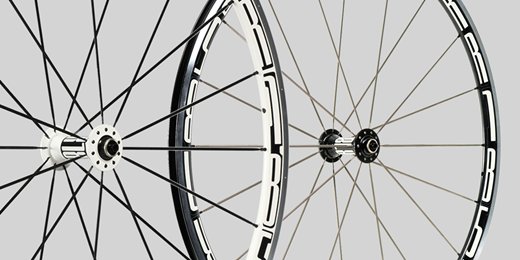
Quick definitions: Hooked rims use a small lip at the bead wall to physically retain the tire, the design nearly every rim used until the mid-2010s. Hookless rims use a straight bead wall with no lip, relying on the tire itself and a tighter manufacturing tolerance to stay seated. Hookless is effectively always paired with tubeless-ready tires.
What actually differs
Why the pressure limit is the whole story
For most road riders running 28mm or wider tires at 60-75 psi, the hookless ceiling never comes into play. It becomes a real constraint for narrower-tire, higher-pressure riders, and for anyone who wants the option to run a non-tubeless tire in an emergency. The hook on a hooked rim exists specifically as a mechanical backstop: it lets the tire bead stretch and still stay retained if pressure runs high or a tire is slightly out of spec. Hookless removes that backstop and puts the safety margin entirely on tighter manufacturing tolerances between rim and tire, which is why rim makers are strict about listing only tested, compatible tires for their hookless wheels.
What the weight and aero numbers really add up to
Across a full wheelset, hookless typically saves somewhere around 20-30 grams versus an identically profiled hooked rim, plus a claimed 1-2 watt aerodynamic benefit from the simpler bead shape at race speeds. Compare that to the roughly 200-400 grams a rider saves moving from a mid-tier alloy wheel to a carbon wheel (seecarbon vs alloy), and the hookless savings are a rounding error by comparison. Nobody should choose hookless over hooked on weight alone; the real decision driver is whether the tire compatibility trade-off is worth it for the manufacturing cost savings that get passed down at the wheel-brand level.
No archive precedent, current research only
Hookless rims postdate this site's 2010-2015 source archive by nearly a decade; every wheel reviewed in that archive, including the era's aero disc wheels like the Mavic Comete, used a conventional hooked bead. There's no historical price anchor to cite here the way there is for carbon-vs-alloy or budget-vs-premium pricing, so every claim on this page is current-generation research, not archive-derived.
Hookless fits you ifyou already run 28mm+ tubeless tires under 70 psi, you're buying a wheelset from a brand that explicitly lists your preferred tire as compatible, and the small weight saving matters to you more than tire flexibility.
Stick with hooked ifyou run narrower tires at higher pressure, you want the option to run a non-tubeless tire as a backup, or you'd rather not check a compatibility list every time you shop for tires. See our
tubeless vs clincher breakdown if you're still deciding on tubeless at all before this question is even relevant.