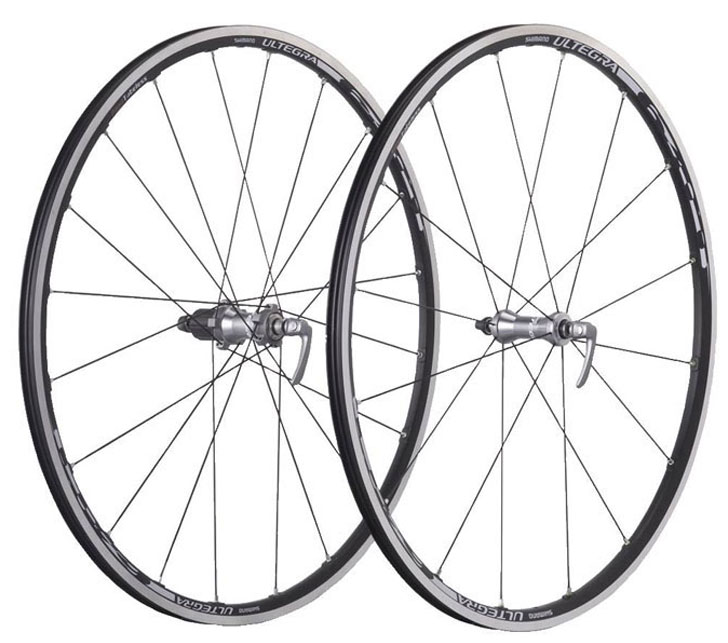
Quick definitions: Rim brake wheels stop the bike by squeezing a caliper against the wheel's rim wall. Disc brake wheels have a separate rotor mounted at the hub; a caliper attached to the frame or fork clamps the rotor instead of the rim. The rim itself never acts as a braking surface on a disc wheel.
What actually differs
Why wet weather is the biggest real difference
A rim brake pad has to squeeze through a thin film of road spray every time it grips a wet rim, and that film measurably delays and softens the bite. A disc rotor and pad sit away from the wheel's contact patch and stay comparatively dry, so stopping distance and lever feel stay far more consistent ride to ride. Riders who commute year-round or live somewhere with frequent rain notice this difference immediately; riders who mostly ride dry-climate weekends notice it far less.
The weight gap is real but has narrowed
A rim brake wheelset still typically comes in 200-400 grams lighter than a comparable disc setup, mostly from the absent rotors, the simpler hub shell, and lighter calipers. That gap was wider a decade ago; lightweight rotor designs and disc-specific carbon layups have closed some of it since. For a climbing-focused rider chasing every gram, see our weight vs aero breakdown for where that trade-off actually pays off on a real climb versus where it's marginal.
What this archive never covered
This site's 2010-2015 source archive predates road disc brakes as a mainstream option almost entirely; the closest thing it covers is aero disc wheels like the Mavic Comete, a completely different product (a solid time trial wheel, not a hub-mounted brake rotor system) that shares the word "disc" and nothing else. Every claim on this page about disc brake wheels is current research, not archive-derived, the same caveat that applies to our hookless vs hooked rimspage.
Disc brake fits you ifyou ride in wet or mixed weather regularly, you want to run 30mm+ tires for comfort or gravel-adjacent rides, or you're buying new and want to match what nearly every current flagship frame now ships with.
Rim brake still makes sense ifyou already own a rim brake frame in good condition, you're weight-focused and ride mostly dry conditions, or you want the simplest, cheapest brake system to maintain and don't need wider tire clearance.
Archive-sourced vs currentA Shimano Ultegra WH-6700 rim brake wheelset sold for about $650 in 2010, per this site's archive. Current-generation disc brake wheelsets at a comparable mid-tier level typically run somewhat higher, often $700-$900, reflecting the added rotor mounts, wider hub shell, and thru-axle compatibility, on top of a decade and a half of general price inflation in the category.