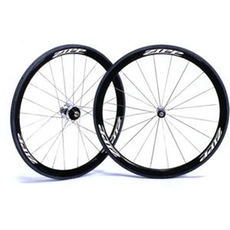
Quick definitions: Aero depth here refers to rim height in millimeters. Deeper generally means more aero benefit at speed and more crosswind sensitivity, up to the point where a rim is deep enough to function like a partial disc wheel.
What actually differs
Why 90mm is a genuinely different category, not just "deeper"
At 90mm, the Aeolus 9.0 is deep enough that the archive review directly compares it to a solid disc wheel, noting riders might get better results from its combined aerodynamics and lighter weight than a disc on a course with any hills or crosswind. That's a real claim worth taking seriously: a well-designed 90mm spoked wheel can outperform a disc wheel in exactly the conditions where a disc struggles, hills and gusty crosswinds, while still giving up some pure flat-road aero advantage.
What a 16-spoke wheel is trading for that depth
Bontrager's wide-spacing 16-spoke lace pattern on the Aeolus 9.0 is unusually low for the load a road wheel carries, made possible by the OCLV carbon rim's strength rather than spoke tension alone. The archive review specifically notes no rider weight limit despite the low count, an explicit engineering claim rather than a vague marketing line, though it's still a narrower-use wheel than Zipp's shallower, more general-purpose 404.
Lean Zipp (moderate depth) ifyou want one aero wheel that works for training, racing, and everyday riding without a dedicated crosswind-day backup plan.
Lean Bontrager (extreme depth) ifyou're specifically chasing time-trial or flat-course aero performance and you'd otherwise be considering a disc wheel, since the Aeolus 9.0 is positioned as a genuine disc alternative rather than a general training wheel.
Archive-sourced vs currentThe Bontrager Aeolus 9.0 sold for about $2,650 in 2011, described in the review as competitive with comparable deep-section wheels from Zipp at the time. Current-generation 80-90mm aero wheels from both brands typically sell in a similar relative range once adjusted for general category price inflation.