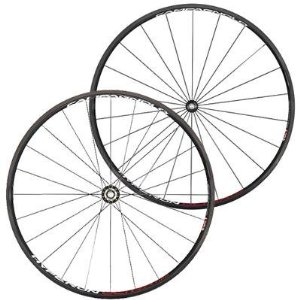
Short answer: a well-cared-for carbon wheelset with no major impact damage can reasonably last 15,000-25,000+ miles or 5-10+ years. Unlike aluminum, carbon has no real fatigue-life clock, so a specific impact, not the calendar, is what actually ends most carbon wheels' service life.
Wear vs. damage: two different clocks
Aluminum rims fatigue gradually under repeated stress, which is part of why an old alloy wheel can eventually crack even with no single incident to blame. Carbon doesn't fail that way. Per Velo's own technical FAQ on carbon wheel lifespan, as long as a carbon rim's structural strength stays ahead of what a rider actually puts it through, it can keep going more or less indefinitely, age alone isn't the deciding factor. What actually ends most carbon wheels' service life is a specific event: a pothole hit hard enough to delaminate the layup, a crash, or a hard curb strike, not a slow wear-out the way a brake pad or a chain wears.
Rim brakes are the real exception to "carbon doesn't wear out"
There's one genuine wear mechanism carbon wheels do have: braking heat on a rim-brake track. A long, hard descent or repeated hard braking generates real heat directly on the same carbon structure holding the wheel together, and that heat cycling is a documented wear path for rim-brake carbon specifically. Disc-brake wheels don't have this problem at all, since braking heat goes into the rotor instead of the rim, which is a genuine durability advantage for carbon disc wheels on top of disc brakes' other benefits. A rider doing a lot of mountain descending on rim-brake carbon should expect to inspect the brake track more often than a flatland rider or anyone on disc brakes.
What actually shortens a carbon wheel's life
| Factor | Effect |
|---|
| Hard impacts (potholes, crashes, curb strikes) | The real end-of-life cause for most carbon wheels; damage can be structural even when not visible |
| Rim-brake heat cycling | Genuine wear mechanism unique to rim-brake carbon; disc brakes don't have this exposure at all |
| Wet, gritty riding conditions | Grit acts like sandpaper against a rim-brake track specifically; less relevant to disc-brake wheels |
| Storage and handling | Minor factor; carbon doesn't degrade sitting in a garage the way rubber or some adhesives can over very long periods |
| Simple mileage/age with no incident | Weak signal on its own; carbon's lack of a fatigue-life clock means high mileage alone doesn't predict failure the way it can with aluminum |
How to check if a wheel is still safe
- After any hard impact. Inspect before the next ride, not on a mileage schedule. Damage isn't always visible from the outside.
- Brake track condition (rim brake only). Look for cupping, deep grooves, or exposed fiber weave. Most rim manufacturers publish a specific wear-limit spec worth checking.
- Flex or soft spots by hand. A section that flexes differently than the rest of the rim, or than it used to, is worth a second look before the next ride.
- Visible cracks or fraying fiber. Not a judgment call; either of these means the wheel needs a professional inspection before it's ridden again.
A repair shop can sometimes fix cracks or delamination, but many riders choose replacement over repair for a structural component like a wheel, since the safety margin matters more than the cost saved. If you're weighing whether your riding style calls for keeping a wheel in harder daily use versus protecting it, see race wheels vs training wheels for how that trade-off plays out in practice.